Chapter 7 vs. Chapter 13 Bankruptcy: Which is Right for Albany, GA Residents in 2026?

June 17, 2026

Choosing between Chapter 7 and Chapter 13 bankruptcy is one of the most important financial decisions Albany, GA, residents may face in 2026. Both chapters offer real relief from debt, but they work in very different ways. Call us at (229) 245-8817 to learn which option may fit your situation.


What Is the Difference Between Chapter 7 and Chapter 13 Bankruptcy?


The two options take fundamentally different approaches to debt relief. Chapter 7 is a liquidation process that wipes out unsecured debts quickly, typically wrapping up within three to six months. Chapter 13, on the other hand, is a reorganization path that lets you keep your assets while repaying what you owe through a structured plan over three to five years.


The distinction matters most when it comes to your home and vehicle. If you are behind on your mortgage, liquidation does little to help you stay in your house, whereas a repayment plan lets you catch up over time. Keeping a vehicle is also more flexible under the reorganization route. Eligibility differs as well. One requires passing a means test, while the other requires proof of regular income. How much unsecured debt you ultimately pay off also varies significantly between the two.


Who Qualifies for Each Chapter Under Georgia's Means Test?


Georgia uses a means test to determine Chapter 7 eligibility. If your household income exceeds Georgia's median, you may need to file Chapter 13 instead. To qualify for Chapter 13 bankruptcy, you need a regular source of income and enough disposable income to fund a repayment plan.


Dougherty County wages are factored into this test. If you recently lost a job, took a pay cut, or are carrying mostly medical debt, the right chapter can vary significantly.


What Debts Cannot Be Discharged in Either Chapter?


Some debts survive bankruptcy regardless of which chapter you file, including child support, alimony, most student loans, and certain tax obligations. We can help you identify which debts may be eligible for discharge or restructuring.


When Chapter 13 Bankruptcy May Be the Smarter Choice


Chapter 13 is often the better fit when asset protection is your top priority. If you are behind on your mortgage, a repayment plan can allow you to catch up on missed payments over time. The same may apply to a car you need for work.


Chapter 13 also helps if your income is too high to pass the Chapter 7 means test, or if you have tax debts and other non-dischargeable obligations that can be spread into manageable monthly payments.


What Assets Can Chapter 13 Help You Protect in Georgia?


Georgia bankruptcy exemptions may protect equity in your home, your vehicle, retirement accounts, household goods, clothing, and jewelry. Under a Chapter 13 plan, you can often keep secured property even if you are behind on payments.


Take the Next Step Toward Financial Relief in Albany, GA


The right chapter depends on your income, assets, and the types of debt you carry. That is why Hall & Mullis, PC. offers free consultations with no money down for Chapter 13 cases. Check out our Google Business Profile to learn more about us.


With over 40 years of combined experience and more than 7,000 bankruptcy cases handled, our team serves clients throughout the Albany, GA, area. Call us at (229) 245-8817 or send us a message to schedule your free consultation.

July 30, 2026
Many Albany, GA, homeowners facing debt want to know whether filing bankruptcy means losing their home. The short answer: it depends on the Chapter you file and how much equity you have. How Georgia's Homestead Exemption Protects Your Home Georgia law gives every homeowner a bankruptcy homestead exemption to shield home equity from creditors. As of July 1, 2026, Georgia's exemption increased from $21,500 to $50,000 per individual debtor under HB 1024. When a married couple files jointly, that amount doubles to $100,000. For Albany, GA, homeowners, this is significant. Dougherty County residents with modest equity may find it fully protected. If your equity falls within the exemption limit, a trustee generally cannot force a sale to pay unsecured creditors. What Does Chapter 13 Bankruptcy Do for Homeowners? Chapter 13 bankruptcy is often the strongest tool available to homeowners behind on their mortgage. Filing immediately triggers an automatic stay, halting foreclosure proceedings the moment your petition is filed. Under a Chapter 13 plan, past-due mortgage payments are spread across a three-to-five-year repayment period while you continue making regular monthly payments going forward. This lets you catch up on arrears at a court-approved pace rather than facing a lump-sum demand from your lender. Albany is part of the Middle District of Georgia, and Chapter 13 cases for Dougherty County residents are handled through the U.S. Bankruptcy Court at the CB King Courthouse on West Broad Avenue. Local trustees have specific plan requirements, so working with an attorney familiar with this district matters. Can I Keep My Home if I File Chapter 7 Instead? Chapter 7 may still allow you to keep your home if you are current on payments and your equity does not exceed your available exemption. If you are behind, Chapter 7 offers no structured way to cure arrears, and the lender may seek to lift the automatic stay and proceed with foreclosure. What If a Foreclosure Has Already Started in Dougherty County? Filing Chapter 13 can stop a foreclosure even after proceedings have begun, as long as the sale has not taken place. Homeowners across Albany who receive a foreclosure notice may still have options if they act quickly. Does the Homestead Exemption Cover Investment or Rental Properties? No. Georgia's bankruptcy homestead exemption applies only to your primary residence. A rental home, vacant lot, or investment property in Albany does not qualify. How Does Chapter 13 Handle a Second Mortgage? In certain situations, Chapter 13 allows lien stripping. If your home's current value is less than what you owe on your first mortgage, a second mortgage may be reclassified as unsecured debt and potentially discharged at the end of your repayment plan, significantly reducing what you ultimately pay.  Take the Next Step for Your Albany, GA, Home Protecting your home from foreclosure while managing debt is possible. Hall & Mullis, PC. serves Albany, GA, and surrounding Southwest Georgia communities with free consultations, no money down on Chapter 13 filings, and same-day service. Call 229-245-8817 to speak with an attorney, learn more about your Chapter 13 bankruptcy options, or contact the firm today to schedule your confidential consultation.
July 30, 2026
Choosing the right bankruptcy chapter is one of the most important financial decisions Albany, GA, residents can make. For residents of Dougherty County, where the median household income sits around $51,508 and roughly one in four residents lives below the poverty line, finding the right path to debt relief is especially critical. A knowledgeable bankruptcy attorney, can evaluate your specific situation and guide you toward the option that protects the most.  What Is the Core Difference Between Chapter 7 and Chapter 13? Chapter 7 eliminates most unsecured debts through a discharge, while Chapter 13 restructures what you owe into a manageable repayment plan. Chapter 7 at a Glance Chapter 7 is often called a "fresh start" bankruptcy. Unsecured debts such as medical bills, credit cards, and personal loans may be wiped out entirely. The process typically completes in a matter of months. However, you must pass a means test based on your income compared to Georgia's median to qualify. Chapter 13 at a Glance Chapter 13 consolidates your debts into one court-approved monthly payment lasting three to five years. Albany residents dealing with foreclosure threats or past-due payments on a home may find Chapter 13 gives them time to catch up without losing the property. Which Chapter Is Right for Albany, GA, Residents in 2026? The answer depends on your income, debt type, and what you want to protect. Here is how each chapter tends to match common situations in the Albany area: Chapter 7 may be a good fit if you: Have primarily unsecured debt such as medical bills or credit cards. Earn at or below Georgia's median household income. Do not have significant equity in a home or vehicle you need to protect. Want the fastest possible resolution to your debt problem. Chapter 13 may be a better option if you: Are behind on a mortgage and want to stop foreclosure. Earn too much to pass the Chapter 7 means test. Have non-dischargeable debts like back taxes you need time to repay. Own assets you could not fully protect under Chapter 7 exemptions. Both chapters trigger an automatic stay the moment you file, which immediately stops creditor calls, garnishments, repossessions, and foreclosures. Does Filing Bankruptcy Hurt My Credit? Both chapters affect your credit. Chapter 7 may remain on your credit report for up to ten years, while Chapter 13 typically stays for seven. Many people begin rebuilding credit within one to two years after filing. Can I Keep My Car and Home if I File Bankruptcy in Albany, GA? You may be able to keep both, depending on the chapter you file and whether payments are current. Chapter 13 is especially useful for catching up on missed mortgage or car payments over time. Do I Need to Pass a Means Test to File Chapter 7? Yes. To file Chapter 7 in Georgia, you must pass a means test comparing your income to the state median. If you earn too much, Chapter 13 may still offer a path to relief. How Long Does Each Bankruptcy Chapter Take? Chapter 7 cases often resolve in three to six months. Chapter 13 plans run three to five years. Take the Next Step Toward Financial Freedom Hall & Mullis, PC serves Albany, GA, residents with over 40 years of combined experience helping people eliminate debt, stop garnishments, and protect their assets. To explore whether Chapter 7 or Chapter 13 is right for you, contact us online or visit our Chapter 7 vs. Chapter 13 in Albany, GA resource. Call 229-245-8817 today for your 100% free consultation.
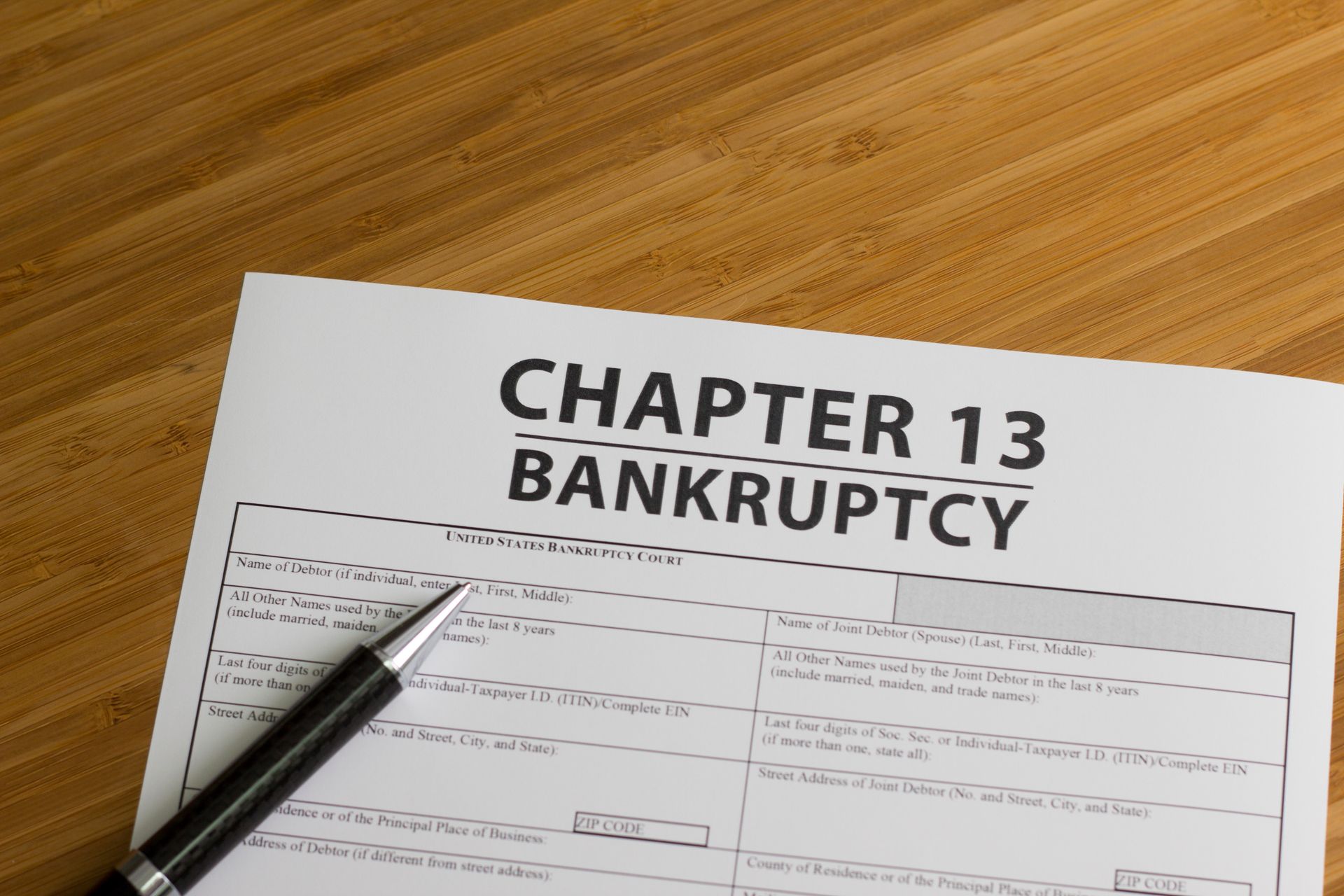
A bankruptcy Chapter 13 document on a bankruptcy lawyer's desk.
By Christine Magtangob June 4, 2026
A bankruptcy lawyer in Albany, GA can halt foreclosure fast. Hall & Mullis, PC, offers consultations and over 40+ years of experience. Call (229) 245-8817.
Hands using calculator while filling out Chapter 13 bankruptcy paperwork on a desk.
June 4, 2026
Find out important signs that show that you need a bankruptcy lawyer in Albany, GA, with Hall & Mullis, PC. Click here to keep reading!