5 Signs You Need a Bankruptcy Lawyer in Albany, GA, Now

June 4, 2026

Knowing when to consult a bankruptcy lawyer can be the difference between regaining financial control and facing long-term consequences that are far harder to recover from. For residents of Albany, financial stress can build quietly until it reaches a breaking point. Understanding the warning signs early may open the door to legal options that stop the damage before it gets worse. A Valdosta-based bankruptcy attorney serving Albany and surrounding South Georgia communities may be able to help you protect your income, your home, and your peace of mind.


5 Signs You May Need a Bankruptcy Lawyer Right Now


An attorney can step in at any of these critical moments to help you understand your options before things escalate further.


Here are five warning signs that it may be time to speak with a bankruptcy attorney:


1. Your Wages Are Being Garnished.


If a creditor has already received a court judgment against you, they may have the legal right to take a portion of your paycheck. Wage garnishment can reduce your take-home pay significantly, making it even harder to cover basic expenses. Filing for bankruptcy may trigger an automatic stay, which can stop garnishment actions immediately.


2. Your Credit Cards Are Maxed Out and You Can Only Make Minimum Payments.


When every card is at its limit and minimum payments eat up most of your monthly income, that cycle rarely corrects itself on its own. This is often called the credit card trap, and it may be a signal that debt has grown beyond what budgeting alone can fix. A bankruptcy attorney can review whether discharging unsecured debt is a realistic path forward for you.


3. You Have Missed Mortgage Payments and Are Worried About Foreclosure.


Missing one or two mortgage payments may feel manageable, but it can quickly lead to foreclosure proceedings. If you are behind on your home loan, a foreclosure attorney may be able to help you explore options such as Chapter 13, which can allow you to catch up on missed payments through a structured repayment plan.


4. Creditors Have Filed Lawsuits Against You.


A creditor lawsuit is a serious step that can result in judgments, liens against your property, or bank account garnishment. Once a lawsuit is filed, time becomes critical. Filing for bankruptcy can often stop a lawsuit in its tracks through the automatic stay, which halts most collection actions while your case is active.


5. You Are Taking Out New Loans to Pay Old Debts.


Borrowing money to cover existing debt payments is one of the clearest signs that the debt load has become unmanageable. This pattern tends to grow over time and can make the overall situation significantly worse. Speaking with a lawyer sooner rather than later may help you avoid deeper financial harm.


Ready to Talk to a Bankruptcy Lawyer?


If any of these five signs sound familiar, speaking with an experienced bankruptcy lawyer sooner rather than later may help you avoid more serious financial and legal consequences. Valdosta-based Hall & Mullis, PC, proudly serves Albany, GA and the surrounding South Georgia area, offering free consultations with no money down required. Call (229) 245-8817 to schedule your consultation. You can also check our Google Profile at Hall & Mullis, PC  to learn more about who we are and how we have helped clients across South Georgia.

Toy car and gavel on a desk as a Chapter 7 bankruptcy attorney reviews vehicle exemptions.
By Hall & Mullis, PC. August 17, 2026
Can you keep your home and car? A Chapter 7 bankruptcy attorney in Albany, GA, at Hall & Mullis, PC. explains Georgia exemptions. Call us at (229) 245-8817!
Bankruptcy attorney discussing debt relief paperwork with clients at a desk beside a gavel.
By Hall & Mullis, PC. August 17, 2026
Need a bankruptcy attorney in Albany, GA? Hall & Mullis, PC helps SW Georgia residents choose between Chapter 7 & 13. Contact us today at (229) 245-8817!
July 30, 2026
Many South Georgia, homeowners facing debt want to know whether filing bankruptcy means losing their home. The short answer: it depends on the Chapter you file and how much equity you have. How Georgia's Homestead Exemption Protects Your Home Georgia law gives every homeowner a bankruptcy homestead exemption to shield home equity from creditors. As of July 1, 2026, Georgia's exemption increased from $21,500 to $50,000 per individual debtor under HB 1024. When a married couple files jointly, that amount doubles to $100,000. For Albany, GA, homeowners, this is significant. Dougherty County residents with modest equity may find it fully protected. If your equity falls within the exemption limit, a trustee generally cannot force a sale to pay unsecured creditors. What Does Chapter 13 Bankruptcy Do for Homeowners? Chapter 13 bankruptcy is often the strongest tool available to homeowners behind on their mortgage. Filing immediately triggers an automatic stay, halting foreclosure proceedings the moment your petition is filed. Under a Chapter 13 plan, past-due mortgage payments are spread across a three-to-five-year repayment period while you continue making regular monthly payments going forward. This lets you catch up on arrears at a court-approved pace rather than facing a lump-sum demand from your lender. Albany, Thomasville, Valdosta, Moultrie, and Tifton are part of the Middle District of Georgia, and Chapter 13 cases for South Georgia residents are handled through the U.S. Bankruptcy Court in Albany and Valdosta. Local trustees have specific plan requirements, so working with an attorney familiar with this district matters. Can I Keep My Home if I File Chapter 7 Instead? Chapter 7 may still allow you to keep your home if you are current on payments and your equity does not exceed your available exemption. If you are behind, Chapter 7 offers no structured way to cure arrears, and the lender may seek to lift the automatic stay and proceed with foreclosure. What If a Foreclosure Has Already Started? Filing Chapter 13 can stop a foreclosure even after proceedings have begun, as long as the sale has not taken place. Homeowners across South Georgia who receive a foreclosure notice may still have options if they act quickly. Does the Homestead Exemption Cover Investment or Rental Properties? No. Georgia's bankruptcy homestead exemption applies only to your primary residence. A rental home, vacant lot, or investment property in South Georgia does not qualify. How Does Chapter 13 Handle a Second Mortgage? In certain situations, Chapter 13 allows lien stripping. If your home's current value is less than what you owe on your first mortgage, a second mortgage may be reclassified as unsecured debt and potentially discharged at the end of your repayment plan, significantly reducing what you ultimately pay. Take the Next Step for Your Home Protecting your home from foreclosure while managing debt is possible. Hall & Mullis, PC. serves Albany, Valdosta, Bainbridge, Thomasville, Tifton and Moultire GA, and surrounding South Georgia communities with free consultations, no money down on Chapter 13 filings, and same-day service. Call 229-245-8817 to speak with an attorney, learn more about your Chapter 13 bankruptcy options, or contact the firm today to schedule your confidential consultation.
July 30, 2026
Choosing the right bankruptcy chapter is one of the most important financial decisions Albany, GA, residents can make. For residents of Dougherty County, where the median household income sits around $51,508 and roughly one in four residents lives below the poverty line, finding the right path to debt relief is especially critical. A knowledgeable bankruptcy attorney, can evaluate your specific situation and guide you toward the option that protects the most.  What Is the Core Difference Between Chapter 7 and Chapter 13? Chapter 7 eliminates most unsecured debts through a discharge, while Chapter 13 restructures what you owe into a manageable repayment plan. Chapter 7 at a Glance Chapter 7 is often called a "fresh start" bankruptcy. Unsecured debts such as medical bills, credit cards, and personal loans may be wiped out entirely. The process typically completes in a matter of months. However, you must pass a means test based on your income compared to Georgia's median to qualify. Chapter 13 at a Glance Chapter 13 consolidates your debts into one court-approved monthly payment lasting three to five years. Albany residents dealing with foreclosure threats or past-due payments on a home may find Chapter 13 gives them time to catch up without losing the property. Which Chapter Is Right for Albany, GA, Residents in 2026? The answer depends on your income, debt type, and what you want to protect. Here is how each chapter tends to match common situations in the Albany area: Chapter 7 may be a good fit if you: Have primarily unsecured debt such as medical bills or credit cards. Earn at or below Georgia's median household income. Do not have significant equity in a home or vehicle you need to protect. Want the fastest possible resolution to your debt problem. Chapter 13 may be a better option if you: Are behind on a mortgage and want to stop foreclosure. Earn too much to pass the Chapter 7 means test. Have non-dischargeable debts like back taxes you need time to repay. Own assets you could not fully protect under Chapter 7 exemptions. Both chapters trigger an automatic stay the moment you file, which immediately stops creditor calls, garnishments, repossessions, and foreclosures. Does Filing Bankruptcy Hurt My Credit? Both chapters affect your credit. Chapter 7 may remain on your credit report for up to ten years, while Chapter 13 typically stays for seven. Many people begin rebuilding credit within one to two years after filing. Can I Keep My Car and Home if I File Bankruptcy in Albany, GA? You may be able to keep both, depending on the chapter you file and whether payments are current. Chapter 13 is especially useful for catching up on missed mortgage or car payments over time. Do I Need to Pass a Means Test to File Chapter 7? Yes. To file Chapter 7 in Georgia, you must pass a means test comparing your income to the state median. If you earn too much, Chapter 13 may still offer a path to relief. How Long Does Each Bankruptcy Chapter Take? Chapter 7 cases often resolve in three to six months. Chapter 13 plans run three to five years. Take the Next Step Toward Financial Freedom Hall & Mullis, PC serves Albany, GA, residents with over 40 years of combined experience helping people eliminate debt, stop garnishments, and protect their assets. To explore whether Chapter 7 or Chapter 13 is right for you, contact us online or visit our Chapter 7 vs. Chapter 13 in Albany, GA resource. Call 229-245-8817 today for your 100% free consultation.
Close-up of “bankruptcy” highlighted in pink with marker on printed text page.
June 17, 2026
Weighing Chapter 13 bankruptcy vs. Chapter 7 in Albany, GA? Hall & Mullis, PC. offers free consults. Call (229) 245-8817 to find the right path forward.
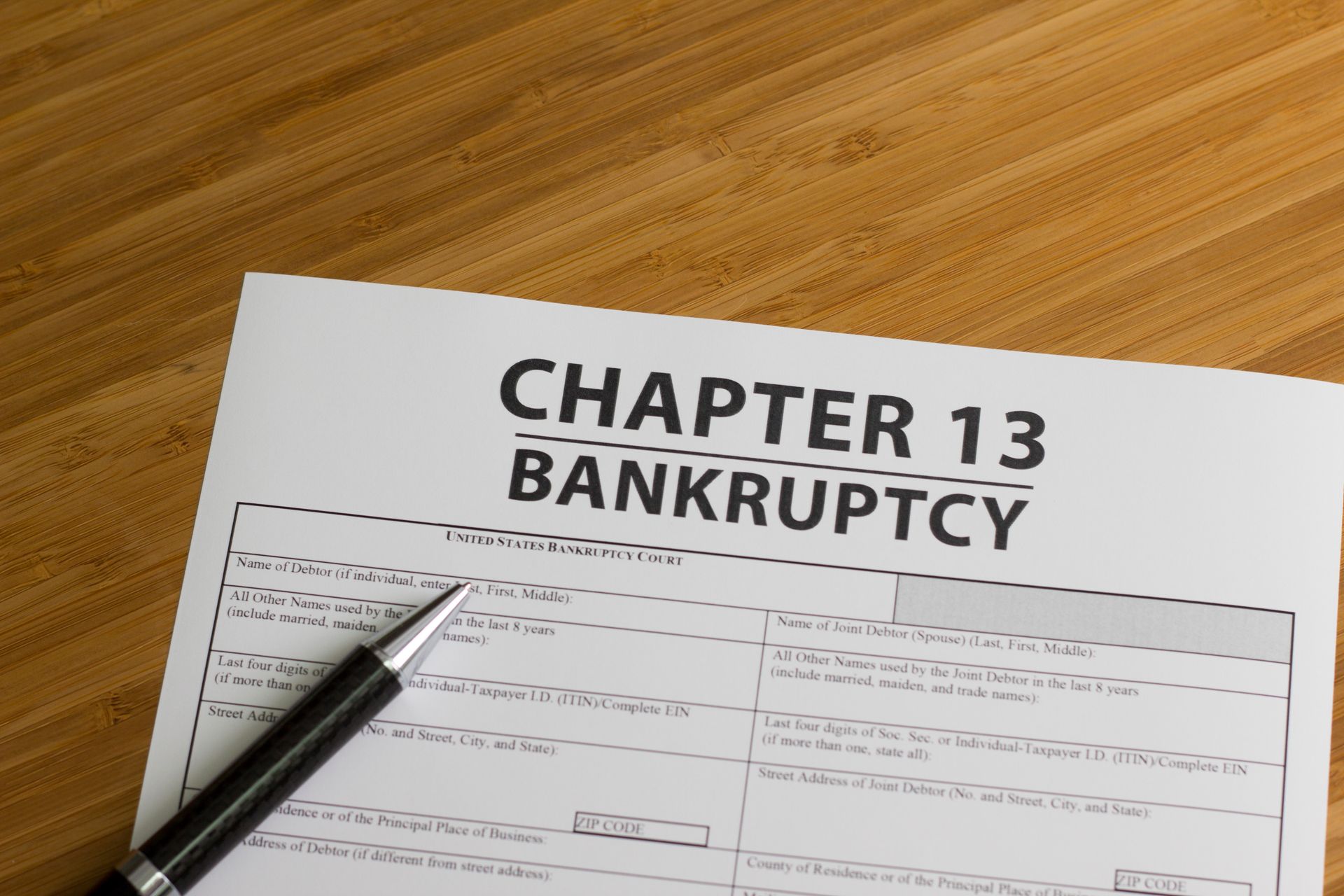
A bankruptcy Chapter 13 document on a bankruptcy lawyer's desk.
By Christine Magtangob June 4, 2026
A bankruptcy lawyer in Albany, GA can halt foreclosure fast. Hall & Mullis, PC, offers consultations and over 40+ years of experience. Call (229) 245-8817.